

STUDY FINDS ROUTINE 14-DAY AMBULATORY ECG AFTER SYNCOPE DOES NOT REDUCE SYNCOPAL EPISODES BUT DOES INCREASE DETECTION OF SIGNIFICANT ARRHYTHMIAS
September 2026

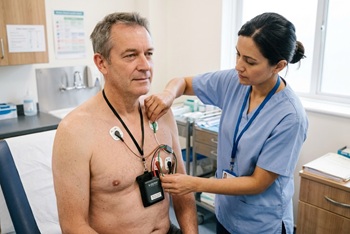
Determining the cause of syncope can be difficult. Approximately half of patients who present to an emergency department with syncope have no cause identified after the initial evaluation. Because an undiagnosed cardiac arrhythmia can have serious consequences, patients are often admitted for observation and telemetry. This approach is costly and frequently unsuccessful, as almost half of admitted patients are still discharged without a diagnosis. Conventional outpatient monitoring also has limitations because intermittent arrhythmias may not occur during a short monitoring period. Longer ambulatory ECG monitoring may improve detection by continuously recording the cardiac rhythm during normal activities.
To evaluate this approach, researchers performed the ASPIRED trial, an open-label, randomized controlled trial at 45 hospitals in the United Kingdom. The study enrolled 2,234 adults whose syncope remained unexplained after emergency department evaluation. Participants were randomized to immediate 14-day ambulatory ECG monitoring with a wearable patch or standard care. After one year, the primary outcome—mean patient-reported syncope episodes—was 1.37 with monitoring and 1.58 with standard care (incidence rate ratio, 0.89; 95% CI, 0.68 to 1.18; P=0.42). Despite the negative primary outcome, monitoring increased detection of clinically significant arrhythmias (22.0% vs 9.0%; odds ratio [OR], 2.95; 95% CI, 2.28 to 3.81) and symptomatic arrhythmias (9.3% vs 5.9%; OR, 1.66; 95% CI, 1.20 to 2.31). Median time to detection of a significant arrhythmia was 22 days with monitoring and 54.5 days with standard care. Monitoring also led to more antiarrhythmic treatment (10.8% vs 7.3%) and pacemaker implantation (6.8% vs 4.6%).
Routine 14-day monitoring did not prevent recurrent syncope, but it did have a clinically meaningful effect, with about seven patients needing monitoring to detect one clinically significant arrhythmia. All-cause mortality was also lower with monitoring (1.5% vs 2.9%; OR, 0.50; 95% CI, 0.27 to 0.93), possibly because earlier detection led to better treatment. However, mortality was a secondary outcome, and confidence intervals for secondary outcomes were not adjusted for multiple comparisons, so this finding requires confirmation. In conclusion, although it did not achieve its primary outcome, ASPIRED supports early 14-day ECG monitoring as an effective way to identify clinically important arrhythmias after unexplained syncope.
- Immediate Ambulatory Electrocardiographic Monitoring in Syncope, NEJM (2026) [PubMed abstract]
- ASPIRED trial summary
- Syncope evaluation and treatment
