

STUDY EVALUATES STATINS FOR PRIMARY PREVENTION IN ELDERLY PATIENTS
September 2026

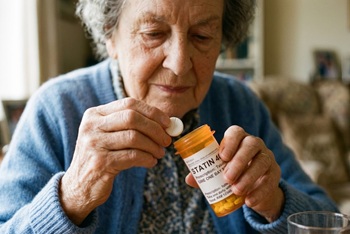
Statins have been proven effective for the primary prevention of cardiovascular disease. Large trials showed that statin therapy reduced major cardiovascular events in patients without established cardiovascular disease, causing them to become one of the most widely prescribed drug classes ever. Their role in older adults is less settled. Fewer than one in four participants in the pooled primary prevention trials were older than 70 years, and in those analyses the cardiovascular benefit per unit of LDL lowering was not statistically significant among patients older than 70 (16%) or older than 75 (8%). Effects on outcomes that matter most to older patients, including dementia and physical disability, have never been assessed as prespecified primary endpoints, and older adults carry a higher risk of adverse effects because of polypharmacy and altered drug metabolism. The 2026 AHA cholesterol guideline reflects this uncertainty by recommending the following for patients over 75 years: (1) decisions should not rest on chronological age alone but on patient priorities, life expectancy, functional status, multimorbidity, frailty, and polypharmacy, (2) initiating moderate-intensity statin therapy may be reasonable when estimated life expectancy is at least 2.5 years after a thorough benefit-risk discussion, (3) coronary artery calcium scoring may help reclassify uncertain cases, and (4) discontinuing therapy may be reasonable when life expectancy is under one year.
The STAREE trial was a double-blind, randomized, placebo-controlled trial conducted at general medical practices across Australia. A total of 9,971 community-dwelling adults 70 years of age or older with no history of cardiovascular disease, diabetes, or dementia (mean age 74.7 years, 51.9% women, mean LDL 127 mg/dl) were randomized to atorvastatin 40 mg daily or placebo and followed for a median of 5.9 years. There were two coprimary endpoints. The first, a composite of cardiovascular death, nonfatal myocardial infarction or stroke, or coronary revascularization, occurred in 297 patients receiving atorvastatin (10.9 events per 1000 person-years) and 412 receiving placebo (15.5 per 1000 person-years; HR 0.70, 95% CI 0.61–0.82; P<0.001), yielding a number needed to treat of 37. The second, a composite of death from any cause, dementia, or persistent physical disability, occurred in 637 and 676 patients, respectively (21.6 vs 23.0 per 1000 person-years; HR 0.94, 95% CI 0.84–1.05; P=0.25). Dementia occurred at nearly identical rates (10.6 vs 10.3 per 1000 person-years; HR 1.03, 95% CI 0.87–1.21). Among secondary endpoints, myocardial infarction (HR 0.57) and coronary revascularization (HR 0.57) were reduced, while stroke (HR 0.87) and death from any cause (HR 0.91) were not significantly different. Serious adverse events were reported in 2.7% of both groups, though musculoskeletal, hepatobiliary, and diabetes-related adverse events were more common with atorvastatin.
STAREE shows that atorvastatin improves cardiovascular outcomes in older adults but does not translate into longer disability-free survival, with no effect on dementia or overall mortality. The cardiovascular result is probably conservative, since only 55.6% of the atorvastatin group was still taking the drug at 5 years and open-label statin use in the placebo group reached 19.4% by year 5, both of which bias toward no difference. The disability findings are harder to dismiss but have their own limits: roughly 80% of deaths were from noncardiovascular causes, and only 140 cases of persistent physical disability occurred, too few to draw firm conclusions about that component. It is also worth keeping the effect size in perspective, as the absolute reduction in cardiovascular events was about 2 percentage points over six years. The trial population was 98% White and drawn entirely from Australian general practice. For clinicians, this study provides concrete numbers for counseling elderly patients without a history of cardiovascular disease who are considering a statin: a meaningful reduction in nonfatal cardiovascular events, no demonstrated effect on dementia, disability, or survival, and a modest increase in muscle, liver, and glycemic side effects.
- Atorvastatin, Cardiovascular Events, and Disability-free Survival in Older Adults, N Engl J Med (2026) [PubMed abstract]
- Statins review — STAREE trial
