

XOCOVA FOR COVID POSTEXPOSURE PROPHYLAXIS
July 2026

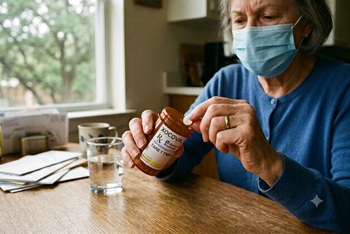
The FDA recently approved ensitrelvir (Xocova®) for postexposure prophylaxis of COVID-19 in adults and adolescents aged 12 years and older following contact with an individual who has COVID-19. It is the first oral antiviral drug approved in the U.S. for this indication. Ensitrelvir inhibits the SARS-CoV-2 main protease (Mpro), also referred to as 3C-like protease, rendering it incapable of processing viral polyproteins and thereby preventing replication. Notably, Xocova is not approved to treat COVID-19 in the U.S., only to prevent it after exposure. Earlier postexposure prophylaxis trials of nirmatrelvir-ritonavir (Paxlovid®) and molnupiravir failed to demonstrate significant protection among household contacts, so this represents the first positive trial in this setting.
Approval was based on SCORPIO-PEP, a double-blind, randomized, placebo-controlled trial that enrolled 2,387 household contacts (mean age 42.4 years, 37% with a risk factor for severe COVID-19) of a patient with COVID-19. Contacts 12 years and older who tested negative for SARS-CoV-2 on local testing were randomized to ensitrelvir (375 mg on Day 1, then 125 mg daily on Days 2–5) or placebo within 72 hours after symptom onset in the index patient. The primary endpoint was RT-PCR–confirmed COVID-19 with at least one of 14 prespecified symptoms lasting ≥48 hours by day 10. COVID-19 occurred in 2.9% of the ensitrelvir group and 9.0% of the placebo group (risk ratio 0.33; 95% CI, 0.22 to 0.49; P<0.001), corresponding to an absolute risk reduction of 6.1%. In the intention-to-treat population, rates were 4.4% and 10.2%, respectively (RR 0.43; 95% CI, 0.32 to 0.59; P<0.001). Adverse events (15.1% vs 15.5%) and serious adverse events (0.2% in each group) were similar. Importantly, more than 98% of participants were positive for antinucleocapsid or antispike antibodies at baseline, meaning almost everyone enrolled had been vaccinated and/or previously infected. There were no COVID-19–related hospitalizations or deaths in either group. Two practical issues limit the drug's utility: it must be started within 72 hours of exposure, and it is a strong CYP3A inhibitor (and an inhibitor of P-glycoprotein and BCRP) with numerous significant drug interactions. It is contraindicated with colchicine, simvastatin, finerenone, triazolam, quinidine, lurasidone, ivabradine, eplerenone, voclosporin, lomitapide, and ergot derivatives, as well as with strong CYP3A inducers.
Xocova comes with a list price of $1,400 for a five-day course, and cash-paying and government-insured patients do not qualify for the manufacturer's copay program. For that price, the drug reduced the incidence of contracting a mild COVID-19 infection by about 6% in a highly immune population, with a number needed to treat of 16—an outlay of about $23,000 per case of mild illness prevented. There were no hospitalizations in the trial, so the drug has not been shown to prevent severe outcomes. Its best use may be in select high-risk, exposed patients rather than routine household prophylaxis.
- Ensitrelvir (Xocova®) review
- Ensitrelvir for Covid-19 Postexposure Prophylaxis in Household Contacts, NEJM (2026) [PubMed abstract]
