

ZITHROMAX DOES NOT IMPROVE OUTCOMES IN CHILDREN WITH WHEEZING
Large ED-based trial finds no benefit for azithromycin in preschoolers, even when pathogenic bacteria are present
Straight Healthcare
June 2026
June 2026

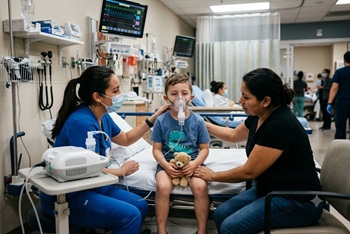
Wheezing is a leading cause of emergency department (ED) visits and hospitalization in young children, and antibiotics are frequently prescribed for these episodes despite wheezing being predominantly viral in origin. Up to one-quarter of preschool wheezing episodes in the United States receive antibiotic therapy, often azithromycin (Zithromax). The rationale has a plausible biological basis: observational studies have documented higher rates of nasopharyngeal colonization with pathogenic bacteria — Streptococcus pneumoniae, Moraxella catarrhalis, and Haemophilus influenzae — in children with recurrent wheezing, and azithromycin has well-characterized anti-inflammatory properties in addition to its antibacterial effects. Prior randomized trials of azithromycin in preschoolers have had mixed results, with two outpatient studies showing modest benefit when the drug was given early, before airway obstruction was established.
To evaluate whether azithromycin reduces symptom severity in children already presenting to the ED with established wheezing, researchers conducted the AZ-SWED trial — a multicenter, randomized, placebo-controlled trial performed at eight US pediatric EDs (N=840 | 5-day treatment period). Children aged 18 to 59 months with moderate-to-severe wheezing (Pediatric Respiratory Assessment Measure [PRAM] score ≥ 4) were randomized to azithromycin 12 mg/kg once daily for 5 days or placebo; all patients also received systemic glucocorticoids and albuterol per standard NHLBI guidelines. The trial used pre-specified separate analyses for children who tested positive for any of the three pathogenic bacteria (positive cohort, N=521) and those who tested negative (negative cohort, N=312). The primary endpoint was the sum of Asthma Flare-up Diary for Young Children (ADYC) scores over 5 days (range 5–35; higher = worse). A planned interim analysis found conditional power below 16% in both cohorts, and the trial was stopped early for futility. ADYC scores did not differ significantly between azithromycin and placebo in either the positive cohort (median 9.59 vs 9.72; p=0.70) or the negative cohort (9.30 vs 9.10; p=0.69). Despite substantial bacterial clearance in the azithromycin group (58.7% vs 11.4% with placebo), there was no clinical benefit. Length of ED stay, hospital length of stay, and return visits within 72 hours were all similar between groups.
This trial adds important evidence that azithromycin should not be used routinely for wheezing in preschoolers who present to the ED. A notable finding is that even children who harbored colonizing bacteria — and in whom azithromycin demonstrably cleared those bacteria — showed no improvement in symptoms. The authors suggest the drug may have anti-inflammatory benefit when given early in an outpatient setting before airway obstruction develops, but not once a child has established respiratory distress requiring ED-level care. These results are consistent with a prior ED-based trial and support existing antibiotic stewardship recommendations. Given that roughly 25% of preschool wheezing episodes currently receive antibiotics, this trial provides a clear and practice-relevant signal that this approach is not effective — and adds to the antibiotic resistance concern that accompanies unnecessary antibiotic use.
To evaluate whether azithromycin reduces symptom severity in children already presenting to the ED with established wheezing, researchers conducted the AZ-SWED trial — a multicenter, randomized, placebo-controlled trial performed at eight US pediatric EDs (N=840 | 5-day treatment period). Children aged 18 to 59 months with moderate-to-severe wheezing (Pediatric Respiratory Assessment Measure [PRAM] score ≥ 4) were randomized to azithromycin 12 mg/kg once daily for 5 days or placebo; all patients also received systemic glucocorticoids and albuterol per standard NHLBI guidelines. The trial used pre-specified separate analyses for children who tested positive for any of the three pathogenic bacteria (positive cohort, N=521) and those who tested negative (negative cohort, N=312). The primary endpoint was the sum of Asthma Flare-up Diary for Young Children (ADYC) scores over 5 days (range 5–35; higher = worse). A planned interim analysis found conditional power below 16% in both cohorts, and the trial was stopped early for futility. ADYC scores did not differ significantly between azithromycin and placebo in either the positive cohort (median 9.59 vs 9.72; p=0.70) or the negative cohort (9.30 vs 9.10; p=0.69). Despite substantial bacterial clearance in the azithromycin group (58.7% vs 11.4% with placebo), there was no clinical benefit. Length of ED stay, hospital length of stay, and return visits within 72 hours were all similar between groups.
This trial adds important evidence that azithromycin should not be used routinely for wheezing in preschoolers who present to the ED. A notable finding is that even children who harbored colonizing bacteria — and in whom azithromycin demonstrably cleared those bacteria — showed no improvement in symptoms. The authors suggest the drug may have anti-inflammatory benefit when given early in an outpatient setting before airway obstruction develops, but not once a child has established respiratory distress requiring ED-level care. These results are consistent with a prior ED-based trial and support existing antibiotic stewardship recommendations. Given that roughly 25% of preschool wheezing episodes currently receive antibiotics, this trial provides a clear and practice-relevant signal that this approach is not effective — and adds to the antibiotic resistance concern that accompanies unnecessary antibiotic use.
- Azithromycin for Preschoolers with Wheezing in the Emergency Department, NEJM (2026) [PubMed abstract]
- Asthma review
