

STUDY COMPARES APIXABAN AND RIVAROXABAN FOR ACUTE VENOUS THROMBOEMBOLISM
March 2026

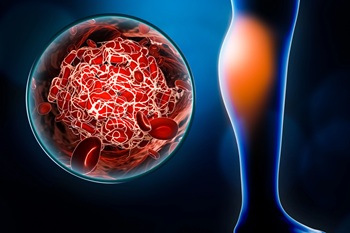
Apixaban and rivaroxaban are the two most widely prescribed direct oral anticoagulants (DOACs) for the treatment of acute venous thromboembolism (VTE). Both medications are generally preferred over traditional therapies like warfarin due to their predictable pharmacokinetics and the lack of a need for routine laboratory monitoring. However, clinical selection between these two DOACs has long been a challenge for providers, as no large-scale, head-to-head randomized trials have compared their safety and efficacy.
To address this gap, researchers conducted the COBBRA trial (Comparison of Bleeding Risk between Rivaroxaban and Apixaban), an international, prospective, randomized, open-label, blinded end-point (PROBE) pragmatic trial. The study randomized 2,760 participants across 32 centers in Canada, Australia, and Ireland. The intention-to-treat analysis included 2,700 adults with acute symptomatic pulmonary embolism (PE) or proximal deep vein thrombosis (DVT). Patients were randomized to receive either apixaban (10 mg twice daily for 7 days, followed by 5 mg twice daily) or rivaroxaban (15 mg twice daily for 21 days, followed by 20 mg once daily) for three months. Since both drugs were already proven effective against VTE, the primary outcome was safety, defined as clinically relevant bleeding (composite of major bleeding or clinically relevant nonmajor bleeding (CRNMB)). Recurrent symptomatic VTE was measured as a secondary outcome. After three months, the primary outcome occurred in 3.3% of the apixaban group and 7.1% of the rivaroxaban group (Relative Risk [RR]: 0.46; 95% CI, 0.33 to 0.65; P < 0.001). Major bleeding alone was also significantly lower in the apixaban arm at 0.4% versus 2.4% for rivaroxaban (RR: 0.16; 95% CI, 0.06 to 0.40). Despite the marked difference in bleeding risk, efficacy remained comparable between the two treatments, with recurrent symptomatic VTE occurring in 1.1% and 1.0%, respectively (RR: 1.08; 95% CI, 0.52 to 2.23). Death from any cause was rare in both groups (0.1% vs 0.3%).
Reasons for the difference are not obvious, but the study authors point to the following observations:
- Most of the difference in bleeding events occurred during the first 3 weeks of treatment. Both drugs have higher initial dosing; however, rivaroxaban's dosing is higher for 3 weeks, whereas apixaban's is higher for 1 week.
- Medication adherence was lower in the apixaban group (65.7%) compared to the rivaroxaban group (75.1%), possibly contributing to the difference in bleeding events. However, both groups had identical ~1% rates of recurrent blood clots, suggesting that adherence did not affect efficacy.
- Bleeding Risk with Apixaban vs. Rivaroxaban in Acute Venous Thromboembolism, N Engl J Med (2026) [PubMed abstract]
- Factor Xa inhibitor review
