

SMALL STUDY LOOKS AT HOLDING GLP-1 ANALOGS BEFORE GI PROCEDURES
April 2026

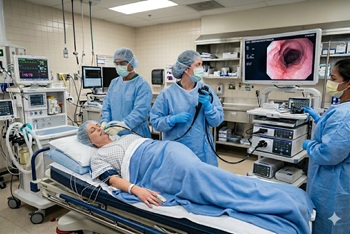
Glucagon-like peptide-1 (GLP-1) receptor agonists are being increasingly prescribed for weight loss and type 2 diabetes. These medications effectively slow gastric emptying, which has raised concerns regarding the risk of residual gastric volume (RGV) and potential pulmonary aspiration during procedures requiring sedation.
Despite these physiological effects, there has been ongoing uncertainty about whether to hold these drugs before elective procedures. Conflicting recommendations from professional societies have left clinicians without a clear consensus on perioperative management strategies, highlighting the need for higher-quality evidence to guide clinical practice.
To help address this knowledge gap, researchers randomized 60 patients undergoing EGD with or without colonoscopy to holding one preprocedure dose of a GLP-1 agonist (hold group) or not holding it (continuation group). Patients in the study were receiving dulaglutide (7), semaglutide injection (27), semaglutide oral (3), and tirzepatide (23). The primary endpoint, presence of clinically significant RGV (>0.8 mL/kg), was found in 25.0% of the continuation group versus 3.1% of the hold group (Absolute Difference: 21.9%; 90% CI, 7.0%–36.7%; P = .003). For patients undergoing colonoscopy, who were on clear liquid diets the day prior, no clinically significant residual gastric volume was found in either group. There was no difference between the groups in the number of procedural complications or adverse events. Additionally, upper gastrointestinal (UGI) symptoms did not correlate with RGV; none of the patients with significant RGV reported symptoms on the day of the procedure.
This small study found that holding GLP-1 medications for a single dose effectively reduces the risk of retained gastric contents. Patients on a pre-procedure clear liquid diet did not have any clinically significant residual gastric volume, whether they held a dose or not. It is important to note that the trial was not powered to detect differences in clinical complications, such as aspiration. Furthermore, the finding that symptom screening did not correlate with RGV suggests that current recommendations to rely on UGI symptom checks are likely insufficient. Finally, the study results may not be generalizable to patients undergoing general anesthesia, as most procedures in this trial were performed under conscious sedation.
- Holding One Preprocedure Dose of GLP-1 Agonists Before Endoscopy, Clin Gastroenterol Hepatol (2026) [PubMed abstract]
- Preoperative evaluation
