

EFFECTIVENESS OF ONE VERSUS TWO DOSES OF HPV VACCINE
February 2026

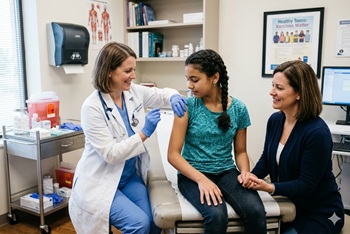
Current guidelines recommend two doses of the human papillomavirus (HPV) vaccine for most adolescents. The Advisory Committee on Immunization Practices (ACIP) advises a two-dose schedule (0 and 6–12 months) for persons who receive the first dose before age 15. The World Health Organization (WHO) has adopted an alternative single-dose recommendation for girls aged 9–14 years and women aged 15–20 years, citing evidence that one dose may suffice. Whether a single dose provides protection comparable to two doses has remained uncertain in the absence of head-to-head randomized data.
To address this gap, researchers conducted the ESCUDDO trial, a double-blind, randomized, controlled noninferiority study in Costa Rica. Girls aged 12 to 16 years were randomized in a 1:1:1:1 ratio to receive one or two doses of the bivalent HPV vaccine (Cervarix) or one or two doses of the nonavalent HPV vaccine (Gardasil 9); Cervarix is not available in the United States. The primary endpoint was new HPV type 16 or 18 infection occurring from month 12 to month 60 and persisting for at least 6 months. Participants were screened for HPV infection every 6 months for 5 years; girls younger than 15 were followed annually until their 15th birthday and then every 6 months. Vaccine effectiveness was estimated by comparing infection rates among trial participants with those among a nonrandomized control group of 2,990 unvaccinated girls and women aged 16 to 21 years enrolled from geostatistical units that were not selected for trial enrollment. Because the control group did not undergo randomization, the researchers used propensity-score adjustment to account for differences in age, geographic region, and sexual activity between trial and control participants.
At the end of the study, one dose was noninferior to two doses for both vaccines. For the bivalent vaccine (Cervarix), the rate difference between one and two doses was −0.13 infections per 100 participants (95% CI, −0.45 to 0.15; P<0.001 for noninferiority). For the nonavalent vaccine (Gardasil 9), the rate difference was 0.21 infections per 100 participants (95% CI, −0.09 to 0.51; P<0.001 for noninferiority). Vaccine effectiveness against HPV16 or HPV18 infection was at least 97% in each of the four trial groups. No safety concerns were identified.
The study supports a single dose of Gardasil 9 for HPV prevention, but it has important limitations. Follow-up was limited to 5 years, so the durability of protection beyond this period is unknown. The effectiveness analysis relied on a nonrandomized control group that may not be fully representative of the population and required propensity-score matching to balance covariates. Despite these weaknesses, the ESCUDDO trial provides the strongest evidence to date that a single dose of HPV vaccine may be sufficient for protection against HPV16 and HPV18, the types responsible for most cervical cancers.
